Bloomington, Indiana
Bloomington, Indiana
College Project
College Project
Seewei: A Socially Assistive Robot for Fine Motor Rehabilitation Through Sewing
Seewei: A Socially Assistive Robot for Fine Motor Rehabilitation Through Sewing
Designing a robot that feels encouraging rather than corrective: Seewei explores how multimodal feedback across voice, visual, and physical touch can help adults with fine motor impairments rebuild confidence and creative joy through sewing.
Designing a robot that feels encouraging rather than corrective: Seewei explores how multimodal feedback across voice, visual, and physical touch can help adults with fine motor impairments rebuild confidence and creative joy through sewing.
Multimodal Interaction Design
Multimodal Interaction Design
Multimodal Interaction Design
Assistive Technology
Assistive Technology
Assistive Technology
0-1 Product Design
0-1 Product Design
0-1 Product Design
Emotional UX
Emotional UX
Emotional UX
Executive Summary
Project Data
My Role
Interaction & Experience Designer, Co-Researcher
Interaction & Experience Designer, Co-Researcher
Team
Human- Robotic Interaction Class (2 interaction designer | 1 UX researchers | 1 technical specialist)
Human- Robotic Interaction Class (2 interaction designer | 1 UX researchers | 1 technical specialist)
Timeline
5 months
5 months
Focus
Accessibility & Assistive Multimodal Interaction
Accessibility & Assistive Multimodal Interaction
Context
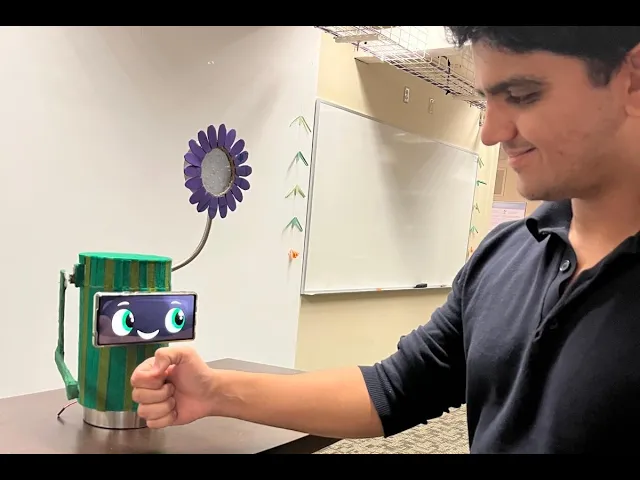
Seewei is a socially assistive robot designed for adults with fine motor challenges caused by arthritis, stroke, or age-related decline. It helps users re-engage with sewing through real-time empathetic feedback, visual progress indicators, and a gentle encouraging personality, without taking control away from the user.
Seewei is a socially assistive robot designed for adults with fine motor challenges caused by arthritis, stroke, or age-related decline. It helps users re-engage with sewing through real-time empathetic feedback, visual progress indicators, and a gentle encouraging personality, without taking control away from the user.
Process
Investigate
Academic literature review on motor rehabilitation and robotic assistance
Investigate
Academic literature review on motor rehabilitation and robotic assistance
Analyse
Semi-structured interviews with 4 participants across affected and adjacent user groups
Analyse
Semi-structured interviews with 4 participants across affected and adjacent user groups
Iteration
Affinity mapping to identify design themes. Three physical prototype concepts developed.
Iteration
Affinity mapping to identify design themes. Three physical prototype concepts developed.
Validate
Wizard of Oz usability testing to validate interaction model
Validate
Wizard of Oz usability testing to validate interaction model
Problem
Solution
Impact
Adults with fine motor impairments abandon creative hobbies like sewing not just because of physical limitations, but due to emotional barriers including lack of visible progress, fear of failure, and frustration from constant correction. Existing assistive tools address physical needs but ignore motivation, confidence, and emotional wellbeing.
Adults with fine motor impairments abandon creative hobbies like sewing not just because of physical limitations, but due to emotional barriers including lack of visible progress, fear of failure, and frustration from constant correction. Existing assistive tools address physical needs but ignore motivation, confidence, and emotional wellbeing.
Adults with fine motor impairments abandon creative hobbies like sewing not just because of physical limitations, but due to emotional barriers including lack of visible progress, fear of failure, and frustration from constant correction. Existing assistive tools address physical needs but ignore motivation, confidence, and emotional wellbeing.
A multimodal assistive robot that delivers real-time visual and emotional feedback through LED patterns, facial expressions, gentle sounds, and a movable observing arm, while preserving user autonomy and sense of control throughout the creative process.
A multimodal assistive robot that delivers real-time visual and emotional feedback through LED patterns, facial expressions, gentle sounds, and a movable observing arm, while preserving user autonomy and sense of control throughout the creative process.
A multimodal assistive robot that delivers real-time visual and emotional feedback through LED patterns, facial expressions, gentle sounds, and a movable observing arm, while preserving user autonomy and sense of control throughout the creative process.
100% of participants preferred guided empathetic feedback over corrective supervision
Users reported feeling "in control" and "not judged" during sewing tasks
Wizard of Oz testing validated that emotional encouragement increases task persistence significantly
100% of participants preferred guided empathetic feedback over corrective supervision
Users reported feeling "in control" and "not judged" during sewing tasks
Wizard of Oz testing validated that emotional encouragement increases task persistence significantly
100% of participants preferred guided empathetic feedback over corrective supervision
Users reported feeling "in control" and "not judged" during sewing tasks
Wizard of Oz testing validated that emotional encouragement increases task persistence significantly
Detailed Project Walkthrough
Detailed Project Walkthrough
Detailed Project Walkthrough
Research
Research
Seewei addresses a gap in assistive technology: existing tools fix physical limitations but don't motivate users toward progress. We conducted semi-structured interviews with 4 participants: an elderly woman with lived sewing experience, two fashion design students, and a faculty member with expertise in craft pedagogy.
Seewei addresses a gap in assistive technology: existing tools fix physical limitations but don't motivate users toward progress. We conducted semi-structured interviews with 4 participants: an elderly woman with lived sewing experience, two fashion design students, and a faculty member with expertise in craft pedagogy.
Seewei addresses a gap in assistive technology: existing tools fix physical limitations but don't motivate users toward progress. We conducted semi-structured interviews with 4 participants: an elderly woman with lived sewing experience, two fashion design students, and a faculty member with expertise in craft pedagogy.
Sprint Conducted
Sprint Conducted
Sprint 1
Problem definition and literature review
Sprint 1
Problem definition and literature review
Sprint 2
User interviews and affinity mapping
Sprint 2
User interviews and affinity mapping
Sprint 3
Prototype concept development (3 physical form factors)
Sprint 3
Prototype concept development (3 physical form factors)
Sprint 4
Wizard of Oz usability testing
Sprint 4
Wizard of Oz usability testing
Sprint 5
Iteration and evaluation
Sprint 5
Iteration and evaluation
Challenge
Challenge
Core Problem
Adults with fine motor issues face three compounding barriers: physical difficulty with precision tasks like threading needles, emotional frustration from invisible progress, and learned non-use, where repeated failure leads to complete abandonment of the activity.
Adults with fine motor issues face three compounding barriers: physical difficulty with precision tasks like threading needles, emotional frustration from invisible progress, and learned non-use, where repeated failure leads to complete abandonment of the activity.
"If I don't get it right in the first few tries, I just stop."
"If I don't get it right in the first few tries, I just stop."
Research & Discovery
Research & Discovery
Understanding the Emotional and Physical Barriers
Fine motor difficulty → Invisible progress → Frustration → Avoidance → Loss of hobby and wellbeing
Understanding the Emotional and Physical Barriers
Fine motor difficulty → Invisible progress → Frustration → Avoidance → Loss of hobby and wellbeing
Progress Visibility Drives Motivation
Users lose motivation when they can't see improvement. Visual and emotional cues that celebrate small wins are more effective than corrective feedback.
Progress Visibility Drives Motivation
Users lose motivation when they can't see improvement. Visual and emotional cues that celebrate small wins are more effective than corrective feedback.
Autonomy Over Supervision
Users want to be supported, not watched. The robot must guide without taking control, preserving the meditative and personal nature of sewing.
Autonomy Over Supervision
Users want to be supported, not watched. The robot must guide without taking control, preserving the meditative and personal nature of sewing.
Emotional Connection to the Craft
Sewing is meditative and identity-connected. A robot that disrupts this emotional state will be rejected regardless of its functionality.
Emotional Connection to the Craft
Sewing is meditative and identity-connected. A robot that disrupts this emotional state will be rejected regardless of its functionality.

Testing: Wizard of Oz Methodology
Testing: Wizard of Oz Methodology
We used Wizard of Oz prototyping to simulate the robot's responses while a team member operated it from the background, allowing us to test the interaction model before building full functionality.
We used Wizard of Oz prototyping to simulate the robot's responses while a team member operated it from the background, allowing us to test the interaction model before building full functionality.
These findings fundamentally reshaped our approach.
Users responded warmly to gentle, non-corrective feedback
Users responded warmly to gentle, non-corrective feedback
Users responded warmly to gentle, non-corrective feedback
Physical engagement with the robot form increased sense of agency
Physical engagement with the robot form increased sense of agency
Physical engagement with the robot form increased sense of agency
Progress indicators on screen reduced mid-task abandonment
Progress indicators on screen reduced mid-task abandonment
Progress indicators on screen reduced mid-task abandonment
Users wanted to feel the robot was "cheering" not "grading
Users wanted to feel the robot was "cheering" not "grading
Users wanted to feel the robot was "cheering" not "grading
Three Initial Concepts & Core Feedback
Three Initial Concepts & Core Feedback
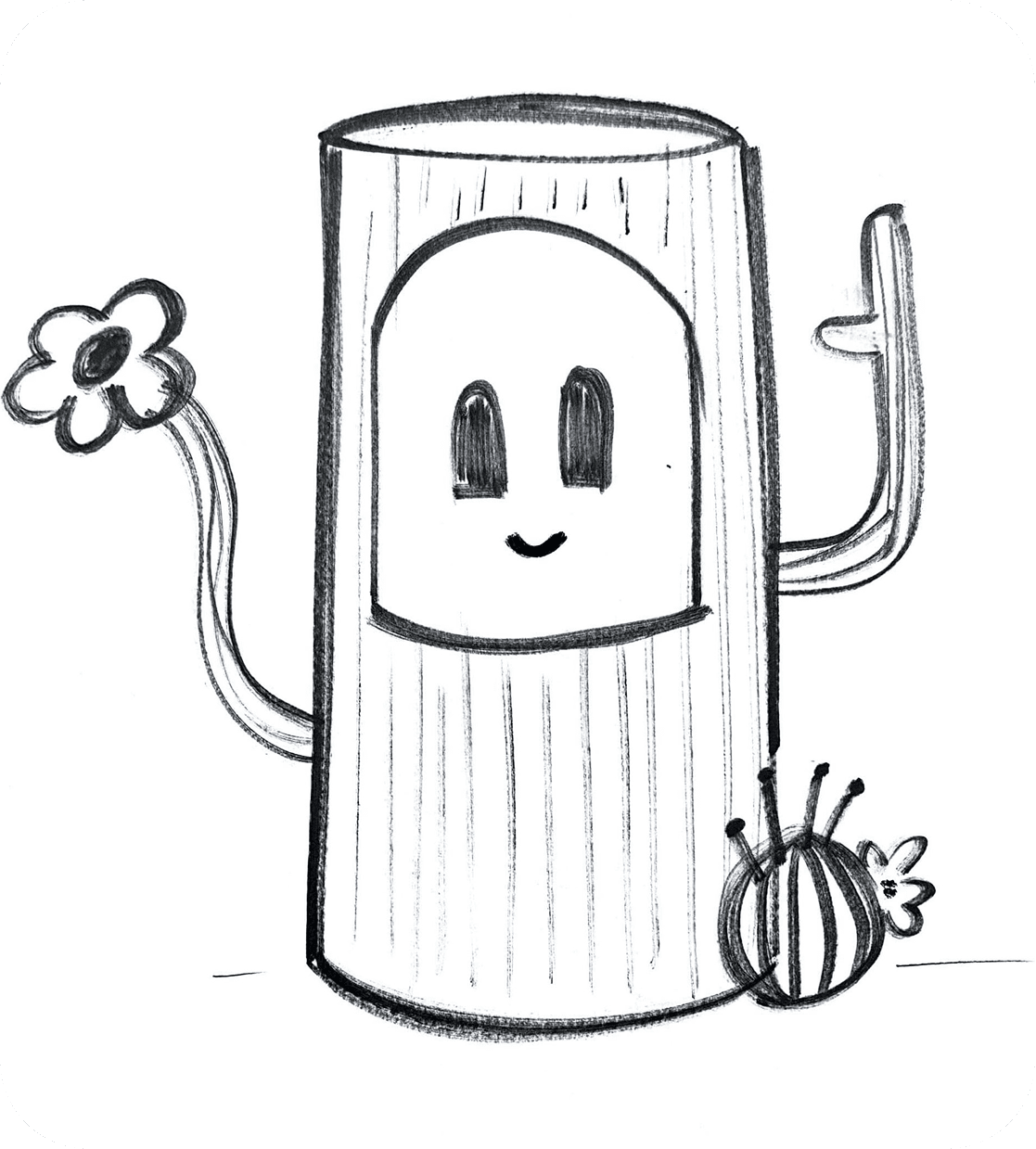
Concept 1: Cactus Companion
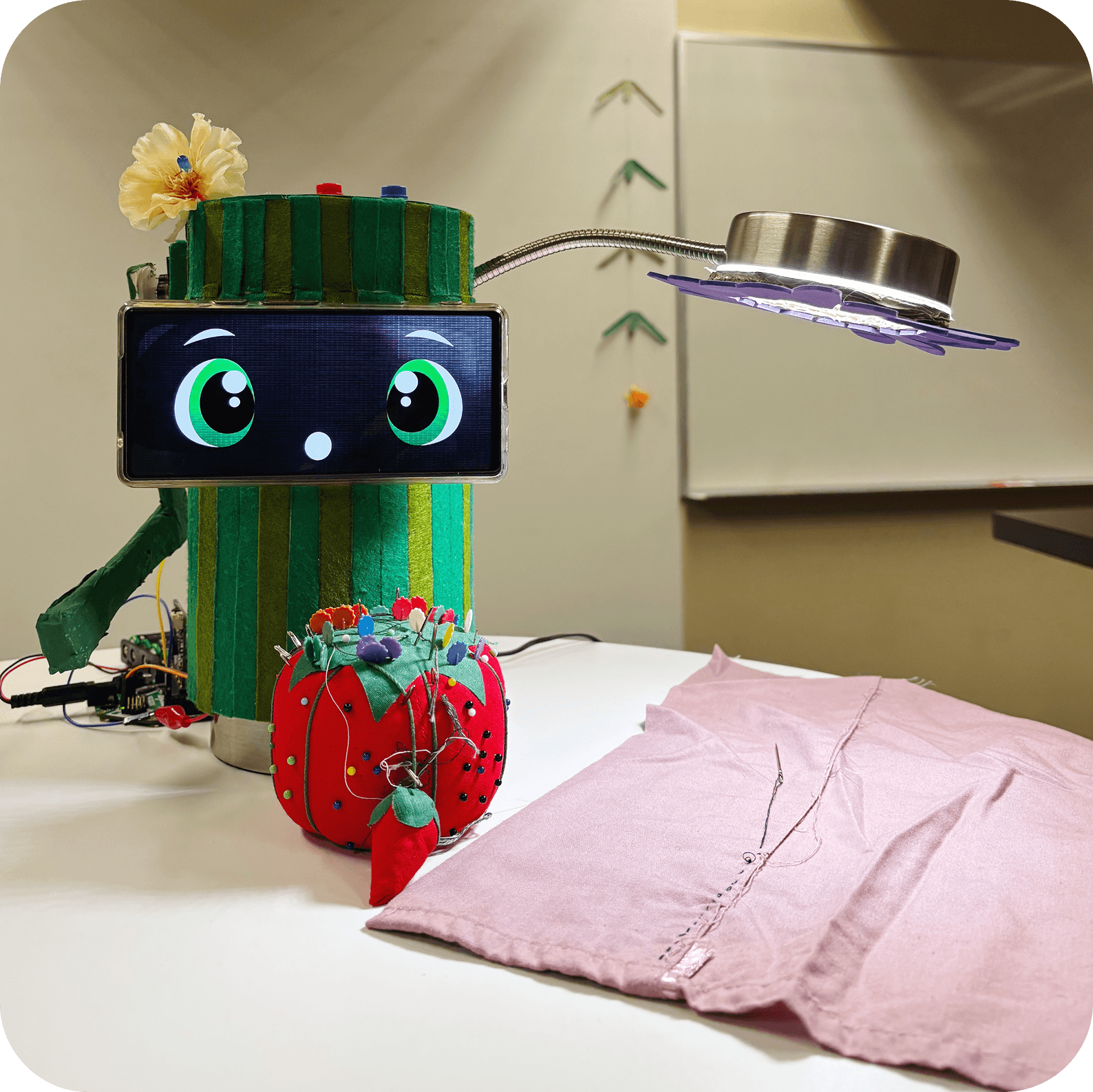
layful desk-sized robot with a movable flower arm users manually rotate to direct observation. LED feedback in the flower center, facial expressions on a small display, gentle sounds for encouragement.
Proceeded
Concept 1: Cactus Companion
layful desk-sized robot with a movable flower arm users manually rotate to direct observation. LED feedback in the flower center, facial expressions on a small display, gentle sounds for encouragement.
Proceeded
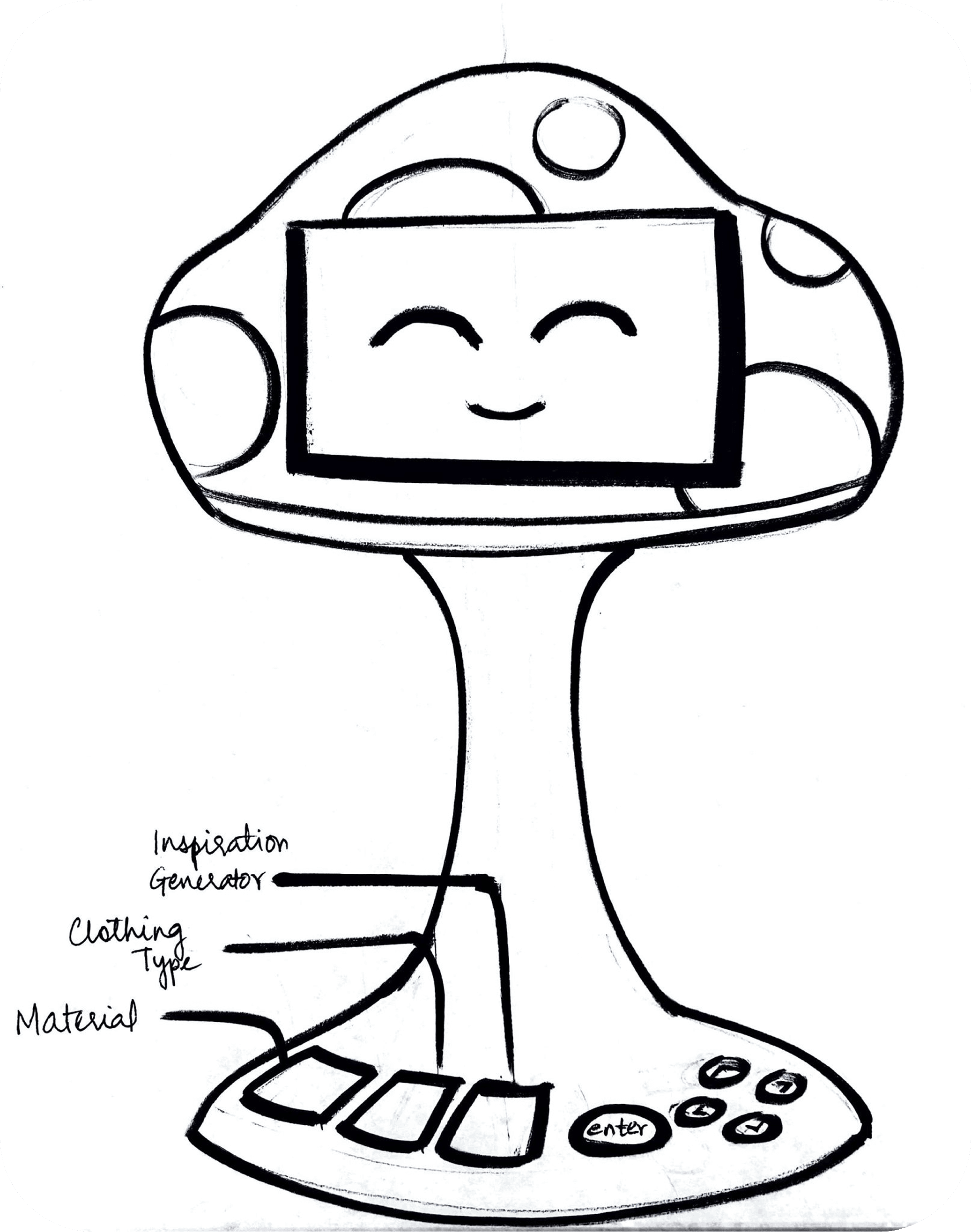
Concept 2: FunGi Mushroom
Three large accessible buttons (Material, Clothing Type, Pattern Inspiration) for users with limited dexterity. LED ring feedback, animated face display, focused on creative suggestion rather than correction.
Discard: Controls Smaller
Concept 2: FunGi Mushroom
Three large accessible buttons (Material, Clothing Type, Pattern Inspiration) for users with limited dexterity. LED ring feedback, animated face display, focused on creative suggestion rather than correction.
Discard: Controls Smaller
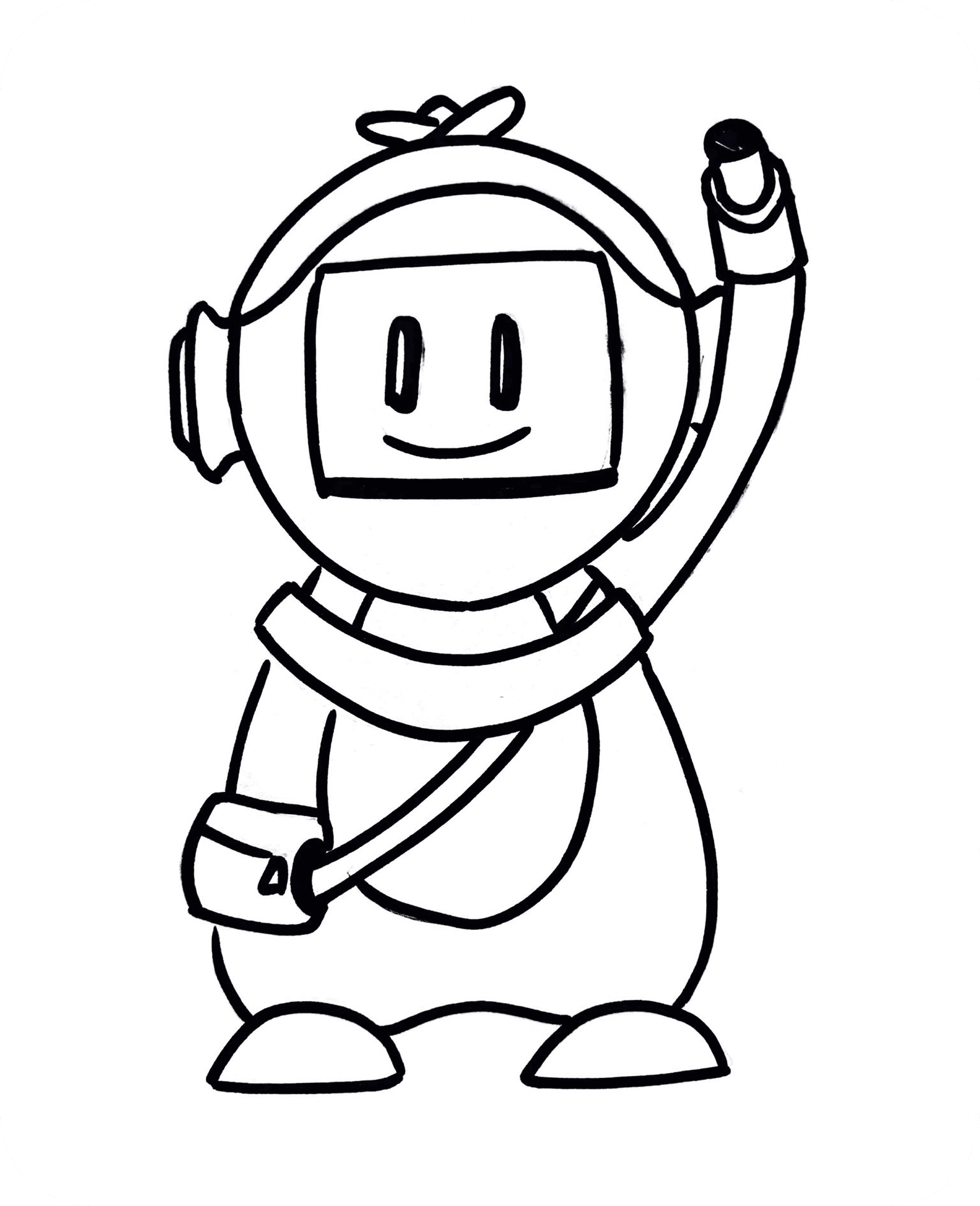
Concept 3: Monkey Mentor
Movable arm to simulate camera repositioning, head nods for positive reinforcement, side pocket for physical material storage. Emphasizes playfulness and physical engagement.
Discard: Not User Intended
Concept 3: Monkey Mentor
Movable arm to simulate camera repositioning, head nods for positive reinforcement, side pocket for physical material storage. Emphasizes playfulness and physical engagement.
Discard: Not User Intended
Final Solution
The Multimodal Feedback System
Final Solution
The Multimodal Feedback System
Final Solution
The Multimodal Feedback System
Real-Time Visual Feedback
Real-Time Visual Feedback
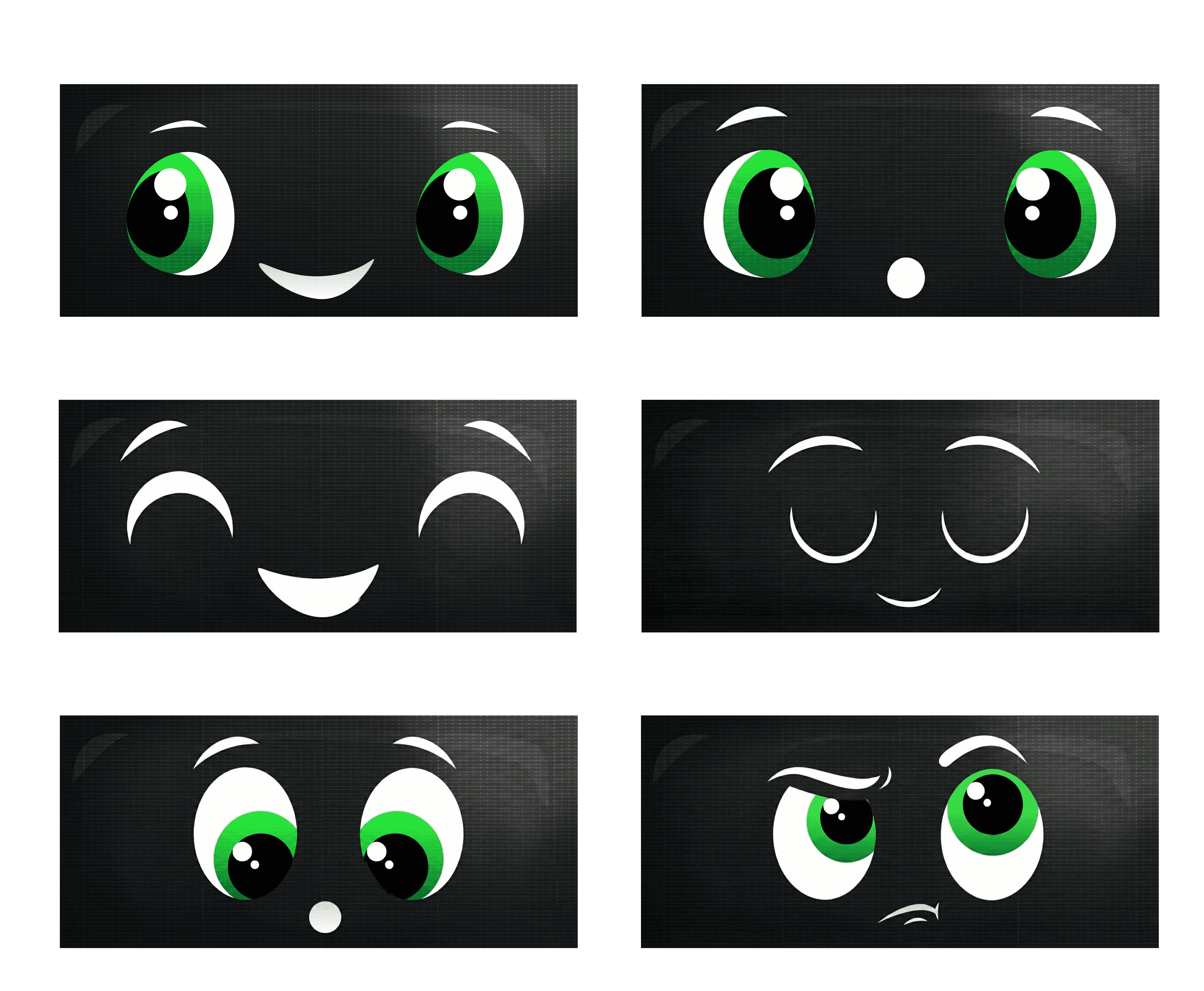
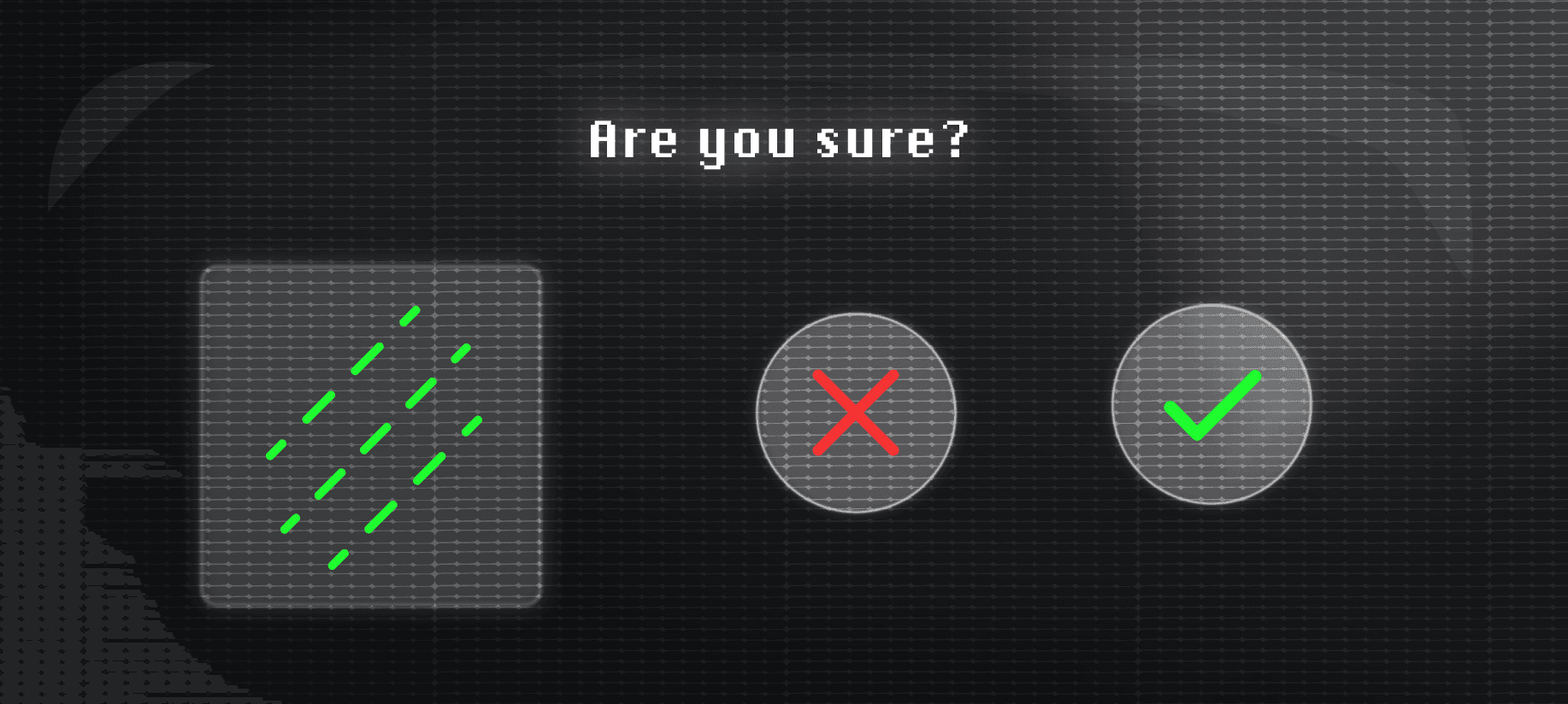
LED patterns and facial animations that react to user actions with encouragement rather than correction
LED patterns and facial animations that react to user actions with encouragement rather than correction
Emotional Personality
Emotional Personality
Gentle head tilts, soft sounds, and celebratory reactions for small wins that preserve user dignity
Gentle head tilts, soft sounds, and celebratory reactions for small wins that preserve user dignity
User Autonomy Controls
User Autonomy Controls
Manual adjustment of the observing arm gives users control over what the robot sees, addressing privacy and supervision concerns
Manual adjustment of the observing arm gives users control over what the robot sees, addressing privacy and supervision concerns
Accessible Input Methods
Accessible Input Methods
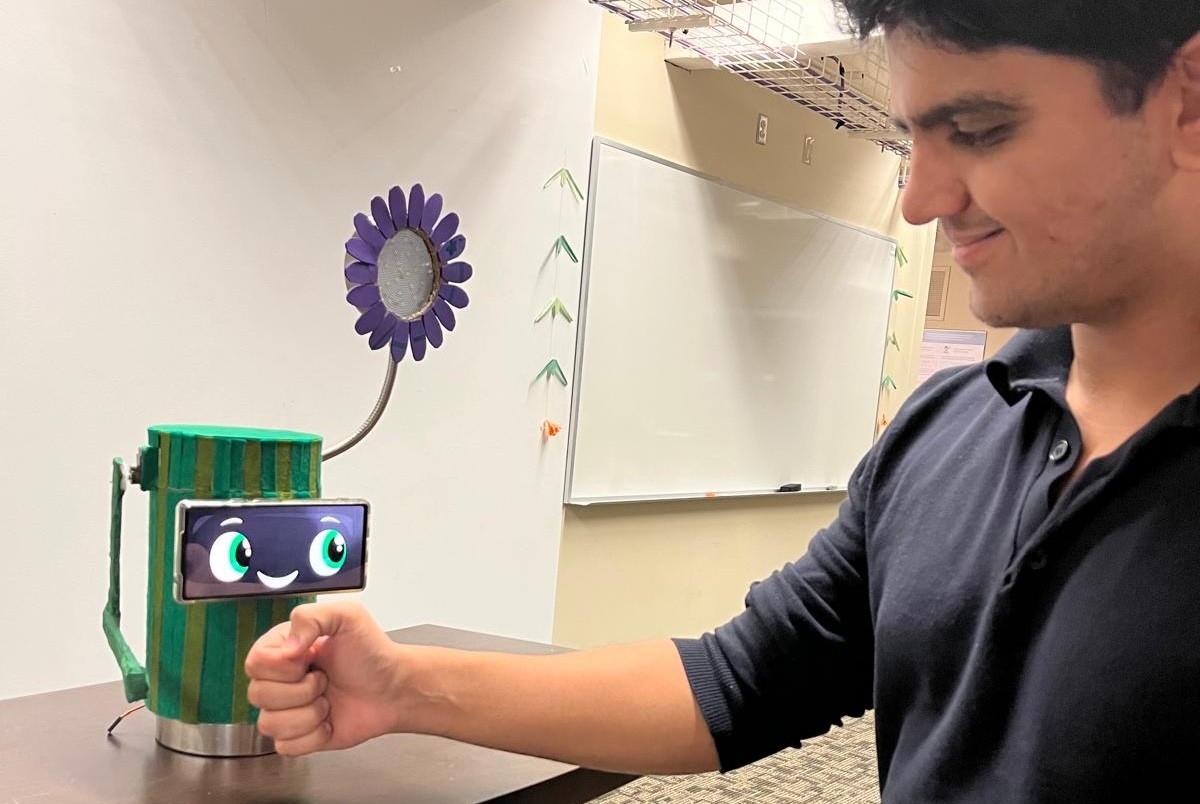
Large buttons, voice commands, and gesture-based interaction for users with varying dexterity levels
Large buttons, voice commands, and gesture-based interaction for users with varying dexterity levels
Impact & The Curb-Cut Effect
Impact & The Curb-Cut Effect
What We Learned Through Iteration
What We Learned Through Iteration
For users with physical and emotional barriers, empathy-first design outperforms correction-first design. The robot's role is not to teach perfectly but to make trying feel safe enough to continue.
For users with physical and emotional barriers, empathy-first design outperforms correction-first design. The robot's role is not to teach perfectly but to make trying feel safe enough to continue.
The Curb-Cut Effect
The Curb-Cut Effect
A robot designed for users with fine motor challenges benefits anyone learning a new tactile skill. Gentle real-time feedback, visible progress, and emotional encouragement improve engagement for all users regardless of ability.
A robot designed for users with fine motor challenges benefits anyone learning a new tactile skill. Gentle real-time feedback, visible progress, and emotional encouragement improve engagement for all users regardless of ability.




Sam.
Let's Connect & Brainstorm the wildest ideas that you wrote in your book when you were a kid!
Sam.
Let's Connect & Brainstorm the wildest ideas that you wrote in your book when you were a kid!
Sam.
Let's Connect & Brainstorm the wildest ideas that you wrote in your book when you were a kid!